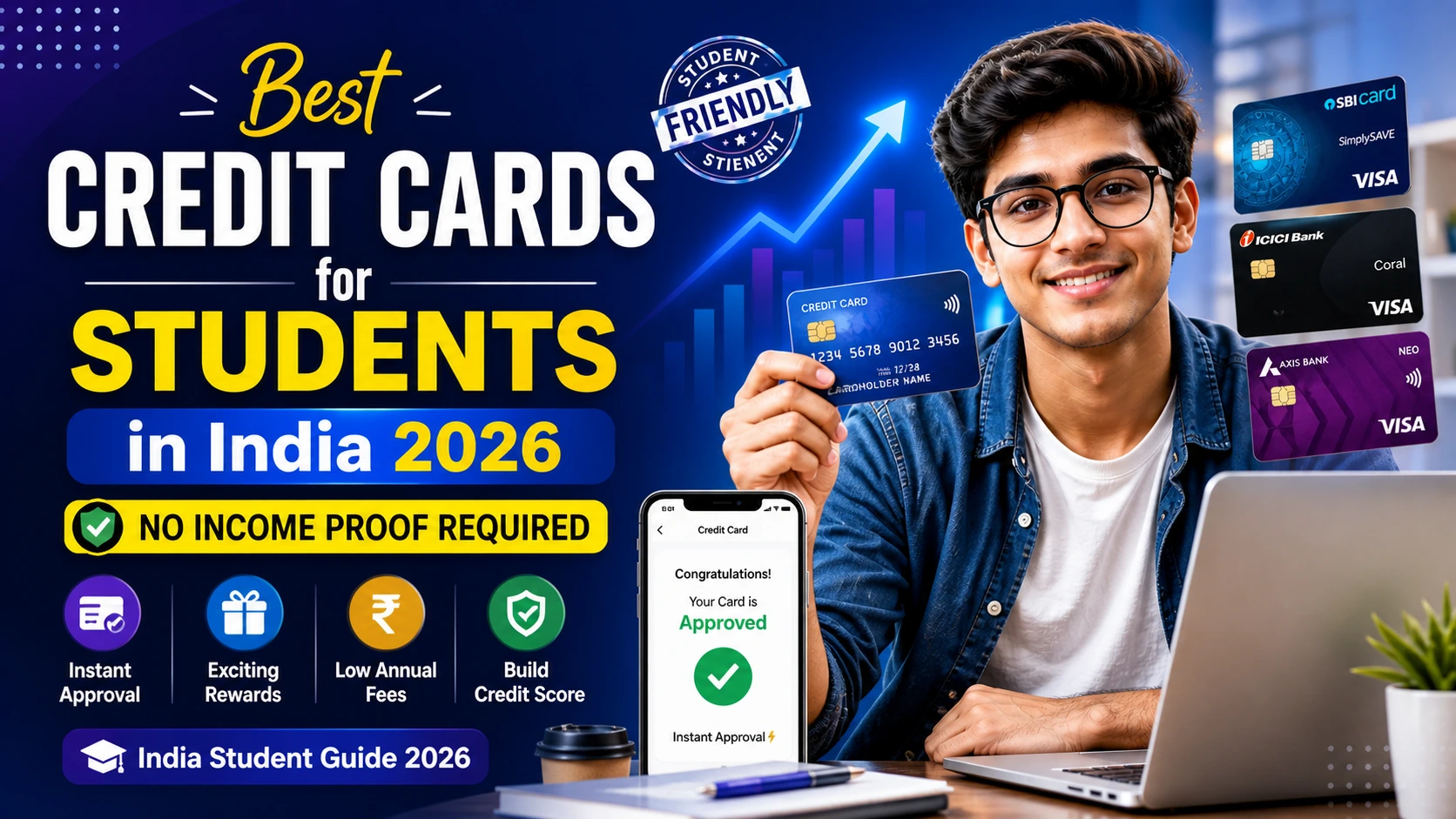
Let me tell you the truth right off the bat: Most “best credit cards for students” articles are copy-pasted from press releases and written by people who never tried to apply for one as a student. This one isn’t. Everything below is based on actual card terms, actual eligibility rules, and real experiences from 2026 applicants.
Most students face this same situation: you need a credit card to build your financial profile, but the bank says they need proof of income. A classic Catch-22. The good news is, there are practical ways to avoid this—and many banks have made it quite easy. Let’s understand it.
Why Students Should Get a Credit Card Now
Most people wait until they get a job to get their first credit card. This is a costly mistake—not in terms of money, but in terms of time lost.
This is important because: Your CIBIL score starts at zero. It doesn’t increase automatically. It only increases when you have active credit accounts—credit cards, loans, overdrafts. Every month you pay your bills on time improves your score. Every month you wait is a month of credit history you’ll never get back.
A student who gets a basic credit card at 18 and pays the full bill every month can realistically have a CIBIL score of 720–750+ by the time they graduate at 21. When they apply for a car loan, home loan, or even a premium credit card at 26, they’ll have 8 years of clean credit history. Banks will love them. Their interest rates will be lower. Their loan limits will be higher. All because they made one smart move at 18.
Beyond the CIBIL angle, student credit cards also come with genuine benefits: cashback on Swiggy and Zomato orders, discounts on OTT subscriptions, reward points on online shopping, and in some cases, even free airport lounge access. These aren’t throwaway perks — they add up over a semester.
How to Get a Credit Card Without Income Proof
Students in India have three main paths to their first credit card:
Option 1: FD-Backed Secured Credit Card (Easiest)
This is the most common and most reliable route. You open a Fixed Deposit (FD) with a bank — sometimes as low as ₹2,000 — and the bank gives you a credit card against it. Your FD acts as collateral. No salary slip, no ITR, no income proof whatsoever. Your credit limit is typically 80–90% of your FD amount.
The FD continues to earn interest while it’s locked in. You’re not “losing” the money — it’s just sitting there earning you 6–7% per year while also building your credit score. This is arguably the smartest financial move a student can make.
Option 2: Add-On Card on a Parent’s Account
If your parent or guardian already has a credit card, they can request an add-on card in your name. You get a physical card with a separate number but the limit is shared. It’s a great way to start using credit responsibly without needing any individual eligibility. The transactions will also reflect on your credit profile.
Option 3: Entry-Level Cards with Low Income Threshold
Some banks offer entry-level unsecured cards with a very low minimum income requirement — around ₹15,000/month in some cases. If you have a part-time job, a stipend, or any documented source of income, these become accessible. Fintech platforms like Slice are even more flexible and have approved students with no credit history at all.
The 6 Best Student Credit Cards in India 2026
These cards were selected based on: no or minimal income proof required, low or zero annual fees, decent rewards on student spending patterns, and active availability for new applications in 2026.
IDFC FIRST WOW! Credit Card
IDFC FIRST WOW! is one of the best beginner credit cards for students in India. It has no annual fee, requires no income proof, and starts with a small FD of ₹2,000.
PROS
- Lifetime free
- No income proof
- FD from ₹2,000
- 0% forex markup
- Rewards never expire
CONS
- FD required
- Limit = FD amount
- Lower rewards
Kotak 811 #DreamDifferent Credit Card
Kotak’s 811 card earns 4 reward points per ₹100 spent online — which is higher than most entry-level cards. If you’re frequently shopping on Amazon, Flipkart, or Myntra, this difference adds up. The credit limit goes up to 90% of your FD, and the linked FD keeps earning interest throughout. Cash withdrawals are interest-free for up to 48 days.
PROS
- 4X reward points on all online spends
- FD continues to earn interest
- Fuel surcharge waiver included
- Interest-free ATM withdrawals for 48 days
- Points don’t expire
CONS
- Minimum FD of ₹15,000 is higher than IDFC
- ₹250 joining fee if FD is below threshold
- Only 1 point per ₹100 on offline spends
AU Small Finance Bank LIT Credit Card
The AU LIT card is genuinely different from everything else on this list. It lets you activate and deactivate specific benefits on a quarterly basis — OTT cashback, dining rewards, fuel waiver, lounge access. You only pay for the features you actually use. For students whose spending habits change frequently, this flexibility is very useful.
PROS
- Fully customizable features
- FD from ₹2,000
- Lifetime free base card
- Flexible for changing spending habits
CONS
- Some features cost extra
- Slightly complex to manage
- Fewer branches than big banks
SBI Student Plus Advantage Card
If you’ve taken an education loan from SBI, this card is a natural extension. It’s designed for students, offers IRCTC benefits, and works well if you travel home frequently.
PROS
- Student-focused card
- Easy with SBI education loan
- IRCTC surcharge waiver
- Strong government bank trust
CONS
- ₹500 annual fee
- Needs SBI relationship
- Lower rewards
ICICI Bank Platinum Chip Credit Card
ICICI Platinum Chip is widely available and easy to get. It offers travel rewards, fuel waiver, and works well if you already have an ICICI account or FD.
PROS
- Lifetime free
- Strong brand trust
- Good travel rewards
- Fuel surcharge waiver
CONS
- Reward limits on utilities
- Best rewards via iShop only
Axis Bank Neo Credit Card
If you order frequently from Swiggy or Blinkit, this card gives one of the best cashback rates. The annual fee is easily recovered within a few months of usage.
PROS
- 10% Swiggy cashback
- OTT vouchers included
- Fee waived in Year 1
- Great for hostel lifestyle
CONS
- Fee from Year 2
- Best benefits only on Swiggy
- May need parent support
Quick Comparison Table
| Card | Annual Fee | Min. FD | No Income Proof | Best For |
|---|---|---|---|---|
| IDFC FIRST WOW! | ₹0 Forever | ₹2,000 | ✓ Yes | Everyone — best starter |
| Kotak 811 DreamDifferent | ₹0 (FD ≥ 15K) | ₹15,000 | ✓ Yes | Online shoppers |
| AU Small Finance LIT | ₹0 Forever | ₹2,000 | ✓ Yes | Flexible spenders |
| SBI Student Plus | ₹500/year | FD or Edu. Loan | ✓ Yes | SBI loan holders |
| Slice UPI Card | ₹0 | None needed | ✓ Yes | Zero-history students |
| ICICI Platinum Chip | ₹0 Forever | FD optional | Conditional | ICICI account holders |
| Axis Neo | ₹250/year | FD / Co-applicant | Conditional | Swiggy regulars |
4 Mistakes Every First-Time Card Holder Makes (Avoid These)
1. Paying Only the Minimum Due
This is the #1 trap. When your statement says “Minimum Amount Due: ₹250” it sounds like you’re fine. You’re not. The remaining balance rolls over and attracts 36–42% annual interest. Always pay the total outstanding amount, not the minimum. If you can’t afford to pay it in full, don’t make that purchase on credit.
2. Using More Than 30% of Your Credit Limit
Your credit utilisation ratio — how much of your limit you’re actually using — is a major component of your CIBIL score. Consistently using more than 30% of your limit signals financial stress to bureaus, even if you’re paying on time. If your limit is ₹10,000, try to keep your monthly spend under ₹3,000.
3. Applying to Multiple Cards at Once
Every credit card application triggers a “hard inquiry” on your CIBIL file. Multiple applications in a short period lower your score. Pick one card, apply for it, get approved, use it for 6–12 months, then consider upgrading. Don’t shotgun-apply to five cards at once.
4. Missing Due Dates Even Once
One missed payment can drop your CIBIL score by 50–100 points and stays on your record for 7 years. Set up auto-pay for at least the minimum due as a safety net, and manually pay the full balance before the due date each month. Use phone reminders if needed.
Final Verdict: Which Card Should You Actually Get?
If you have any money in FDs (even ₹2,000–₹5,000): Get the IDFC FIRST WOW! card. It’s lifetime free, requires the smallest FD, has zero forex charges, and reward points don’t expire. Honestly, there’s no better starter card in India right now.
If you shop a lot on Amazon or Flipkart: Consider the Kotak 811 #DreamDifferent card. It’s hard to get 4X rewards on online spending at this fee tier. Just make sure you can afford an FD of ₹15,000.
If you don’t have any money for an FD at all: Try Slice. It’s the easiest option for students with zero credit history and no income. Read the terms carefully and keep your usage in check.
If you order from Swiggy every day: The Axis Neo card will cover your expenses with just 10% Swiggy cashback for the first two months.
Whatever you choose: The card itself is just a tool. Your habits determine whether it helps or harms you. Pay in full every month, don’t spend what you don’t have, and your first credit card will be one of the best financial decisions you’ve ever made.